

four elements : ค้นหาหนังสือธรรมะ หน้า 3 / 3
หน้าหนังสือทั้งหมด
22
Building a Strong Marriage: Essential Factors for Success
clash with each other, or for them not to clash with their in-
laws. No matter what, there is always a chance that this can
happen.
The major concern is that, if the couple didn't learn how
to regulat
This text discusses the importance of emotional regulation in marriage and the need for couples to prepare before their union. It outlines four essential factors for a successful marriage, including s
24
Dhamma for Laypersons: Cultivating Good Habits
A person who has the Dhamma for Laypersons
(Gharavas-dhamma) must display four regular habits:
1. Habit of Responsibility - Whatever the task at hand,
he must do it to the best of his ability, in term
บุคคลที่มีธรรมสำหรับอุบาสกอุบาสิกาต้องแสดงถึงนิสัยประจำสี่ประการ ได้แก่ นิสัยความรับผิดชอบ, การฝึกฝนและพัฒนาตนเอง, ความอดทน, และการเสียสละและการให้ นิสัยเหล่านี้ช่วยทำให้กลายเป็นผู้นำครอบครัวที่ดี การ
25
Understanding the Beauty of Mind and Family Guidance
that warn, "Sweet words are more devastating" or "Sweet
beginning, bitter ending" or "Sweet mouth, sour bottom."
4th Level: Beauty of Mind - This is the beauty of the
virtue within a person, which can
เนื้อหานี้สำรวจระดับความสวยงามของคนซึ่งยกย่องการมีศีลธรรมในความรับผิดชอบและกิจกรรมประจำวัน บทความยังเน้นถึงบทบาทสำคัญของผู้ให้คำปรึกษาในเรื่องการแต่งงาน ผู้ที่มีประสบการณ์สามารถช่วยแก้ไขปัญหาครอบครัวแ
37
The Four Universal Forms of Benevolence
The Buddha answered this question in one word:
benevolence. That is to say mutual benevolence, the practice
the Four Universal Forms of Benevolence (Sangahavatthu),
promote happiness in living togethe
This text discusses the Buddha's concept of mutual benevolence as the foundation for happiness in relationships. It outlines the Four Universal Forms of Benevolence: Giving, Pleasant Speech, Mutual Be
143
Understanding the Five Precepts
The children
The senior monk
The children
The senior monk
: Yes, he will.
:
And have you ever lied to him?
Yes, I have.
Remember this, if you lie to somebody,
they will feel less love for you each tim
This passage discusses the significance of the Five Precepts in Buddhism, focusing on honesty and the consequences of lying. The text outlines how adherence to the first four precepts — not killing, s
22
Essential Factors for a Successful Marriage
clash with each other, or for them not to clash with their in-laws. No matter what, there is always a chance that this can happen.
The major concern is that, if the couple didn’t learn how to regulat
This text explores the importance of emotional regulation in marriages, emphasizing training before marriage to manage disagreements effectively. Couples prepared with self-reliance, the ability to ch
37
Practicing the Four Universal Forms of Benevolence
The Buddha answered this question in one word: benevolence. That is to say mutual benevolence, the practice the Four Universal Forms of Benevolence (Sāngahavatthu), promote happiness in living togethe
The Buddha highlighted benevolence as key to mutual happiness. The Four Universal Forms include: 1. Giving (Dāna) – sharing wealth and support fosters a positive atmosphere. 2. Pleasant Speech (Piyavā
45
Understanding Dhamma and Spiritual Realization
This corresponds to the set of four activities41 belonging to a Stream-attainer (sotāpattiyānga) which brings about other sets of qualities.
The titles ‘born of dhamma’ (dhammaja) and ‘created by dham
This content discusses the process of spiritual attainment through dhamma, emphasizing four key activities that lead to the emergence of noble qualities. It highlights how listening to the Buddha's te

90
Buddhist Manuscripts from Sipsong Panna Region
Buddhist manuscripts from the Sipsong Panna region can be divided into four categories. The first category consists of the Dai Pāli Tripiṭaka and Tripiṭaka commentary (三藏琢) which is represented by fiv
Buddhist manuscripts from the Sipsong Panna region are categorized into four main groups: the Dai Pāli Tripiṭaka and Tripiṭaka commentary, frequently used Pāli Canon texts, Theravāda Buddhist literatu
127
The Practice of Ānāpānasmṛti: Breath Meditation in Early Buddhism
describing the practice of the four smrtyṣhānas associated with the breath (ānāpānasmṛti), and resulting the attainment of the three vimoksamukhās.42
An Shigao’s translation of the Ānāpānasmṛti Sūtra
This text delves into the practice of Ānāpānasmṛti, a significant Buddhist meditation focused on breath. It highlights An Shigao’s translation of the Ānāpānasmṛti Sūtra and its influence on later monk
140
Understanding Education and Its Impact on Society
Suzanne Jeffrey
"Look at the difficulties within animals. You need to meditate to find out, to truly understand, that animals are humans who are trying to break free. In order to do this, you need to
This text discusses the importance of education in shaping moral behavior and societal change. It emphasizes that to change the world, individuals must first change themselves and adhere to the four p
2
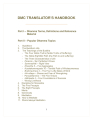
DMC Translator’s Handbook
DMC TRANSLATOR’S HANDBOOK
Part I -- Dhamma Terms, Definitions and Reference Material
Part II – Popular Dhamma Topics
1. Buddhism
2. The Buddha’s Life
3. The Teachings of the Buddha
- The Four Nob
The DMC Translator’s Handbook provides essential references on Dhamma terms and popular topics in Buddhism. It encompasses teachings like the Four Noble Truths, the Noble Eightfold Path, and meditatio
69
Popular Dhamma Topics
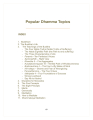
Popular Dhamma Topics
INDEX
1. Buddhism
2. The Buddha’s Life
3. The Teachings of the Buddha
- The Four Noble Truths (Noble Truths of Suffering)
- The Noble Eightfold Path (the Path to end suffe
This page provides an index of popular Dhamma topics within Buddhism. It covers key concepts such as the Buddha's life, core teachings like the Four Noble Truths and the Noble Eightfold Path, and esse
27
Understanding the Four Noble Truths in Buddhism
**1. Saccaṇāṇa:** This first cycle of examination of the knowledge of the Four Noble Truths established the knowledge of the Truth of their Existence. Thus he was to find out: 'this is the Noble Truth
This text outlines the process of examining the Four Noble Truths in Buddhism through three cycles: Saccaṇāṇa (knowledge of existence), Kiccāṇāṇa (knowledge of duty), and Kataṇāṇa (knowledge of fulfil
45
The Buddha's Teachings on Right Livelihood and Moral Conduct
the monk's equivalent of Right Livelihood, by avoiding such evils as fortune telling, sacrifices or interpreting dreams, because these are all 'low arts'[tiracchānavijjā]. The Buddha even prohibited m
This text discusses the Buddha's teachings on Right Livelihood, emphasizing the avoidance of 'low arts' such as fortune telling and the prohibition of harmful trades for monks and laypeople. In partic

49
The Artistry Behind Preaching the Four Noble Truths
3
The Four Noble Truths
The Artistry Behind Preaching the Four Noble Truths
In the Dhammacakkapavattana Sutta as in his other sermons, the Lord Buddha explains not only Dhamma subjects, but the relat
In the Dhammacakkapavattana Sutta, the Lord Buddha presents the Four Noble Truths, emphasizing their interconnected nature. Each Noble Truth is not standalone; they influence and clarify one another.
50
Understanding the Noble Truths of Suffering
the 'Noble Truth of the Suffering', the 'Noble Truth of the
Origin of Suffering' and the 'Noble Truth of the Cessation
of Suffering'. In brief, the artistry of the Lord Buddha is to
integrate all four
The teachings of the Lord Buddha encompass the Four Noble Truths, with a significant focus on understanding suffering. Suffering is characterized through various forms — from birth to death, highlight
131
Mindfulness and Right Concentration in Buddhism
7.4 Mindfulness of the *dhammas* in the *dhammas*
Mindfulness of the *dhammas* in the *dhammas* is to see and consider the mental phenomena both inside and outside, the whole of the time. Seeing the
Dieser Abschnitt behandelt die Achtsamkeit gegenüber Dhammas und die richtige Konzentration im Buddhismus. Die Achtsamkeit richtete sich sowohl auf innere als auch äußere mentale Phänomene, die erford
144
The Components of the Eightfold Path
The Components of the Eightfold Path all arise together
When the factors of the Eightfold Path arise, they do so to-
gether — just as the elder monk Koṇḍañña, after listening
to the Dhammacakkapavatta
This text discusses the Eightfold Path, emphasizing how all eight components arise together as illustrated by the elder monk Koṇḍañña's attainment of Stream-Entry. It explains the importance of Right
177
The Enlightenment of the Buddha’s First Disciple
The Enlightenment of the Buddha’s First Disciple
In preaching the Dhammackakapavattana Sutta, the Buddha revealed the Thirty-Seven Factors of Enlightenment [bodhipakkhiyadhamma], the Cycle of Depende
The Buddha, in the Dhammackakapavattana Sutta, introduced the Thirty-Seven Factors of Enlightenment, laying down the framework of the Four Noble Truths and the Cycle of Dependent Origination. Dhammaca